Why Queensland is tough on wine
Heat speeds up the chemistry that ages wine. A bottle that would develop slowly in a cool cellar can turn flat and tired after a few hot summers on a kitchen bench. In south-east Queensland, a house without air-conditioning can stay warm for months, and few Queensland homes have a basement to retreat to.
Big swings are as much of a problem as heat. Warming by day and cooling at night makes the wine expand and contract in the bottle, which can push wine past the closure.
What wine needs
A steady, cool temperature
Cellars are traditionally kept cool, around the low to mid teens in degrees Celsius. More important than the exact number is keeping it steady, day and night, summer and winter.
Darkness
Strong light, especially sunlight and ultraviolet, can damage wine. It's why wine is often bottled in dark glass. Keep bottles out of direct sun, and use warm, low-UV lighting such as LED where they're on display.
Moderate humidity, for corks
Humidity matters mostly for cork-sealed bottles, because a cork that dries out can let air in. Most Australian wine is now sealed under screwcap, which isn't affected by humidity. If you keep imported or older cork-sealed wines, store them lying down and away from very dry air.
Stillness
Wine is best left alone. Keep it away from constant vibration, such as from laundry appliances, and avoid moving bottles you're keeping long term.
Where not to keep wine
- The kitchen: beside the oven, above the fridge or on the bench, where heat builds up.
- The garage or carport: hot in summer, with big swings between day and night.
- The laundry: warm, humid and full of vibration.
- A sunny window or a glass cabinet in the sun: light and heat together.
- Under the house: cooler than the kitchen, but rarely steady, and open to dust and pests.
Wine fridge, cellar or wine room?
For a small collection, a good wine fridge is a sensible answer. For a larger collection there are two main options in Queensland: dig or build a cellar, which is rarely practical, or install a temperature-controlled wine room. We compare the options in wine room or wine fridge?
The glass problem in humid weather
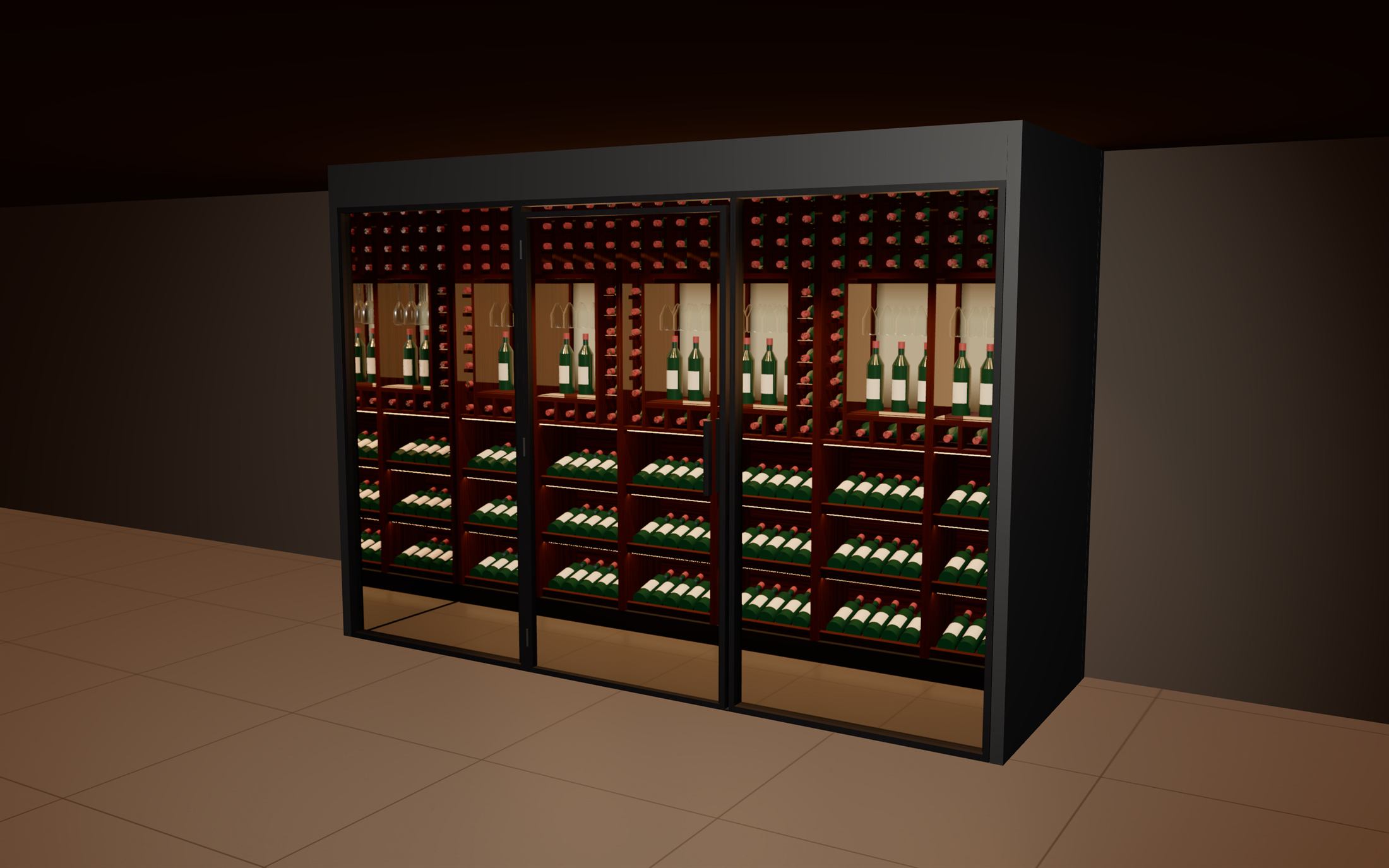
A wine room with a glass front is the best way to show off a collection, but in humid air glass is where things go wrong. Warm, moist air meeting cold glass leaves condensation, and a fogged or dripping door ruins the view and wets the frame.
That's why the glazing matters more here than in a dry climate. Look for:
- Insulated double glazing rather than a single pane.
- Low-E coatings and gas-filled units, which keep the room-side glass warmer.
- Heated frames, ideally controlled to the dew point, so the edges, where condensation starts, stay above it.
Vintage Vault uses 27 mm low-E, argon-filled double glazing in heated frames on a dew-point controller, from the same factory that makes refrigerated glass doors for Australian liquor retailers.
Insulation and cooling
A wine room works only as well as its walls. Insulated panels keep the outside heat out, so the cooling unit works less and holds the temperature steadier. Vintage Vault uses 50 mm polyurethane panels for the walls, roof and rear and a 75 mm insulated floor. A dedicated wine-cellar cooling unit is built into the roof, and the heat load of every model has been calculated so the unit runs well within its capacity.
A quick checklist
- Keep wine somewhere cool and, above all, steady.
- Keep it dark, or lit with warm, low-UV light.
- Lie cork-sealed bottles down.
- Avoid kitchens, garages, laundries and sunny windows.
- If you're building a wine room in Queensland, check the glazing, the insulation and how the cooling is sized.